
I have encountered some Christians who live in constant fear of what is to come. The very thought of the end times, the second coming of Christ, or the final judgment frightens them so much that they would rather not hear about it. Some become anxious whenever the Church speaks about the end of the world, while others would rather avoid such discussions altogether.
But is this how a Christian ought to approach the Lord’s coming? Should the thought of Christ’s return fill us with fear, or should it inspire us to live with greater faithfulness, vigilance, and hope?
In our second reading, St. Paul reminds us that the day of the Lord will come like a thief in the night. This means that nobody knows the exact time or hour when the Lord will come. His coming will be unexpected, and for this reason we must always be prepared. However, St. Paul makes an important distinction: although the day will come unexpectedly, it should not catch us unprepared or unaware like a thief.
He tells us that we are not children of darkness but children of light and of the day. Therefore, we must not live as though we do not know the Lord or as though our lives lack an eternal destination.
To live in the light is to let the Word of God guide our lives. As the Psalmist declares in Psalm 119:105, “Your word is a lamp for my feet, a light on my path.” God’s Word illuminates our decisions, corrects our mistakes, directs our actions, and helps us distinguish what is pleasing to God from what leads us away from Him.
A person who walks in the light is not someone who has all the answers to life’s uncertainties. Rather, it is someone who allows God to direct their steps, even when the future is unclear. It is the person who understands what the master wants, as Jesus illustrates in our gospel passage.
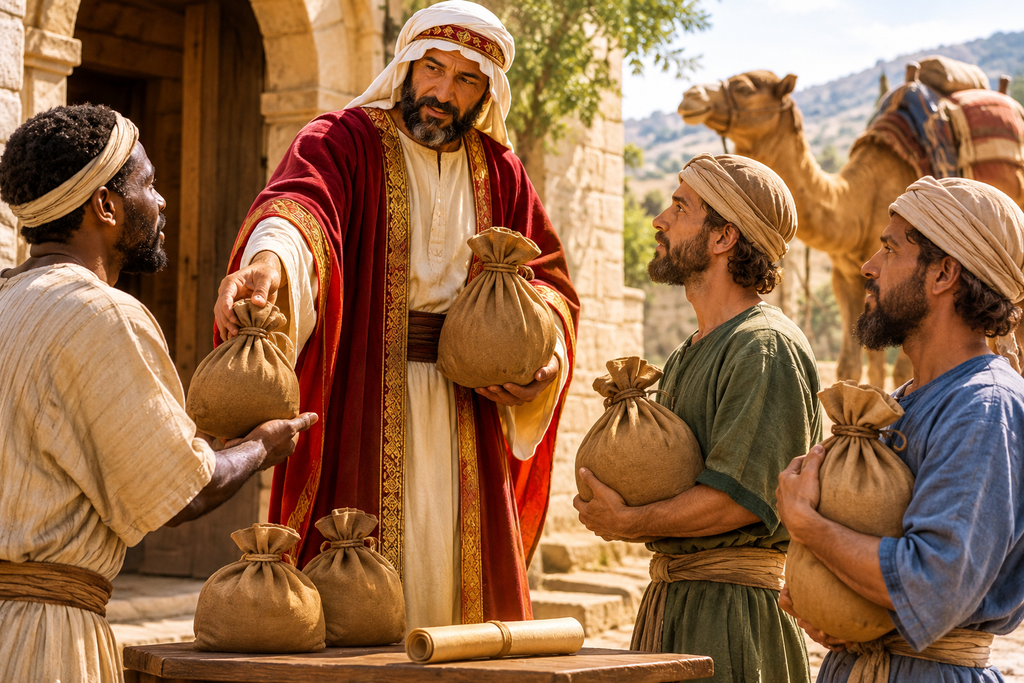
A man who was about to travel entrusted his property to his servants. To one he gave five talents, to another two, and to another one, each according to his ability. They responded differently; the first two went out and invested what had been entrusted to them, each doubling their master’s possessions. But the third servant, out of fear, dug a hole and buried his master’s talent.
When the master returned, he called his servants to give an account of what they had done with what he had entrusted to them. The first two servants were commended for their faithfulness and productivity. But the third servant had a different story. He had nothing to show for what had been entrusted to him. His excuse was that he was afraid of his master. Rather than taking a risk and putting the talent to work, he allowed fear to paralyze him. Consequently, he was condemned for his unfaithfulness.
There is a connection between this Gospel and our first reading. Both passages remind us that we must live responsibly and accountably before God.
The Christian life is not simply about waiting for the Lord to return; it is about what we do while we wait for Him. We are tempted to be preoccupied with the signs of the end, but are we paying attention to the signs of our own spiritual lives? We worry about when the world will end, but do we ever reflect on whether we are using our days meaningfully? We fear the final judgment, but are we making any effort to live lives that will please the One who will judge us?
The parable of the talents teaches us that God has entrusted something to each of us. The talents in the parable can represent our gifts, abilities, time, resources, opportunities, responsibilities, and even the faith we have received.
Not everyone receives the same gifts, nor does everyone have the same opportunities. Some may have five talents, others two, and still others one. What matters is not the quantity of what we have received; it is our faithfulness in using what has been entrusted to us.
Perhaps my talent is the ability to encourage someone who is discouraged, or perhaps it is leadership. Perhaps God has placed you in a family, a workplace, a community, or a parish where your presence and contributions can make a difference.
Are we investing our talents in the service of God and humanity, or are we burying them? We must not allow fear to keep us from fulfilling God’s purpose for our lives, as the third servant in today’s parable. We must not be so afraid of making mistakes that we refuse to take the necessary steps towards growth. Neither should we allow fear of the future to distract us from the responsibilities of the present.
The Lord does not call us to live in anxiety; He calls us to live in readiness. He does not want us to spend our lives speculating about the day of His coming while neglecting the work He has set before us. Rather, may we be found faithful, fruitful, and ready to welcome Him. And may our greatest concern not be when the Lord will come, but whether He will find us faithful when He comes.
Amen.