
In our first reading a week ago, we heard the House of Israel accuse God of injustice. They complained, saying, “The way of the Lord is not fair.” In other words, they questioned God’s dealings with them. They felt God was treating them unfairly because He said that if a sinner repents, that person will be saved, but if a righteous person turns away and does evil, that person will be condemned.
But today, in our first reading, God turns the question around. He asks: “What more was there to do for my vineyard that I have not done?” I planted my vineyard on a fertile hill, dug around it, and did everything needed to make it produce choicest grapes, yet it produced wild grapes.
“What more was there to do for my vineyard that I have not done?” This is a powerful question. It is not merely about agriculture or farming. It is about our relationship with God.
God’s vineyard is the house of Israel, His chosen people. He did everything necessary for His people; He brought them out of the land of slavery and gave them His word. He protected them, guided them, forgave them, and remained faithful to them. He entered into a covenant with them and continually called them back whenever they wandered away. Yet they called His way unfair.
The same message continues in today’s Gospel. Jesus tells us about a landowner who planted a vineyard, fenced it in, built a winepress, constructed a tower, leased it to tenants, and then travelled to another country.
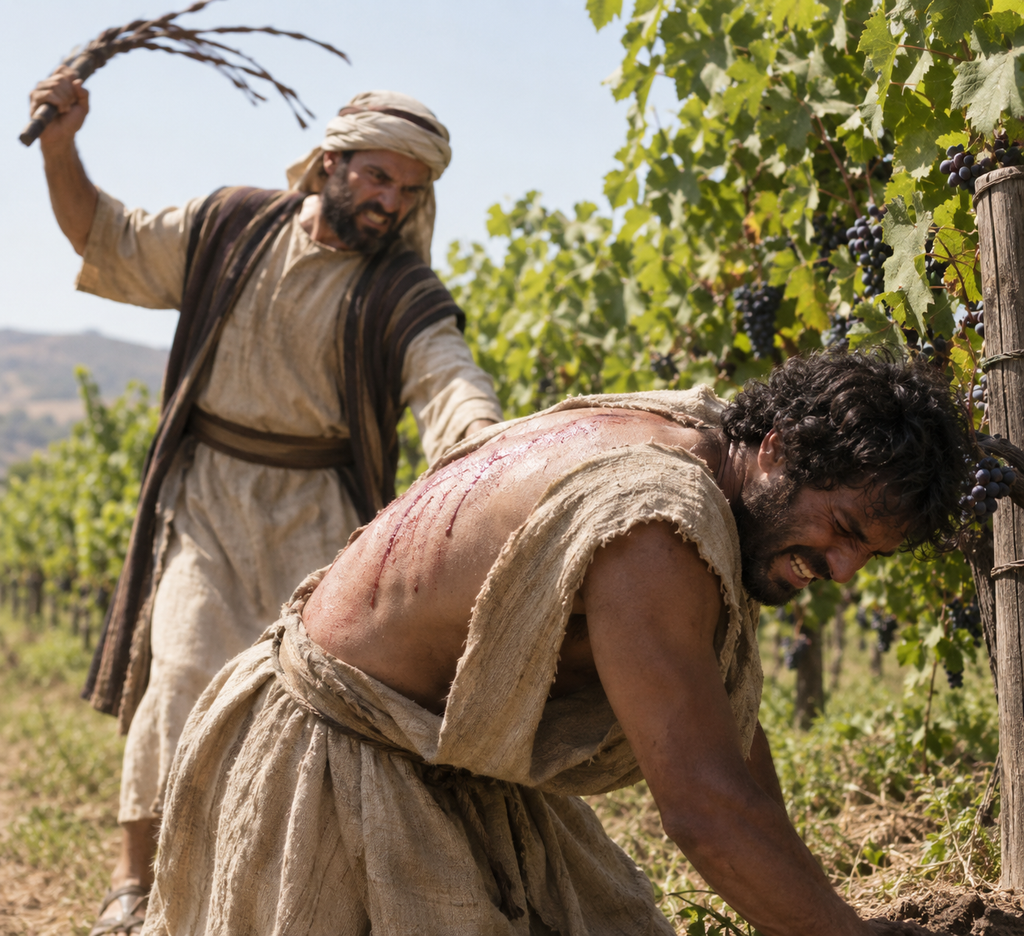
When the harvest season arrived, the owner sent his servants to collect his share of the produce. But the tenants refused. They seized the servants, beat some, stoned others, and killed another. The owner sent more servants, but the tenants treated them the same way. Finally, the owner sent his son, thinking, “They will respect my son.” But they killed him too.
Jesus intends these parables for us as well, because we are part of God’s vineyard. God has planted each of us in this world with a purpose. He has given us life, talents, opportunities, family, friends, education, faith, and countless blessings. He has given us His Church, His Word, the Sacraments, and above all, His greatest gift: His Son, who died for us on the cross.
Today’s question is what kind of fruit I am producing. When the Master comes, what will I have to present to Him? Will He find the fruits of love, kindness, patience, forgiveness, generosity, humility, justice, compassion, and faithfulness? Or will He find the wild grapes of hatred, bitterness, envy, pride, dishonesty, selfishness, unforgiveness, and indifference?
It is easy to look at someone else’s vineyard and identify the bad fruit, but the call is to examine our own vineyard.
We live in a society today that measures success by the material things we own and the number of followers we have on Facebook, Instagram, TikTok, or other social media platforms. We may measure ourselves by the size of our bank account, the car we drive, the house we live in, the clothes we wear, the titles we carry, or the recognition we receive from other people. But God does not measure us by these things but by the fruits of our lives we produce.
It is possible to look like a Christian without allowing Christ to transform our lives. We can carry a Bible and still refuse to forgive. We can attend Mass and still harbour hatred in our hearts. We can say our prayers and still treat people cruelly. We can wear religious symbols and still live without charity.
We are called not merely to be churchgoers but to be believers.
A believer does not merely hear the Gospel; a believer lives it. A believer does not merely receive the Eucharist; a believer becomes what he or she receives. A believer does not merely say, “Lord, Lord.” A believer seeks to do the Father’s will and produce good fruits.
Some of us may have stopped bearing good fruit because of disappointment. Perhaps we have allowed anger, wounds, betrayal, or past experiences to harden our hearts. Or maybe we have grown so comfortable with our sins that we no longer recognize them as obstacles to our relationship with God.
Today’s Gospel calls us to wake up, for the owner of the vineyard is coming. It is not too late to start afresh, renew our commitments to serve the Lord, and prepare our harvest for the Lord by His grace.
Amen.