The recent Artemis II journey to the Moon was a remarkable event to witness—an extraordinary expression of human ingenuity, coordination, and technological progress. It stands as one of those moments in history that naturally invites admiration, not only for what was achieved, but for what it reveals about human capability when science, engineering, and ambition converge.
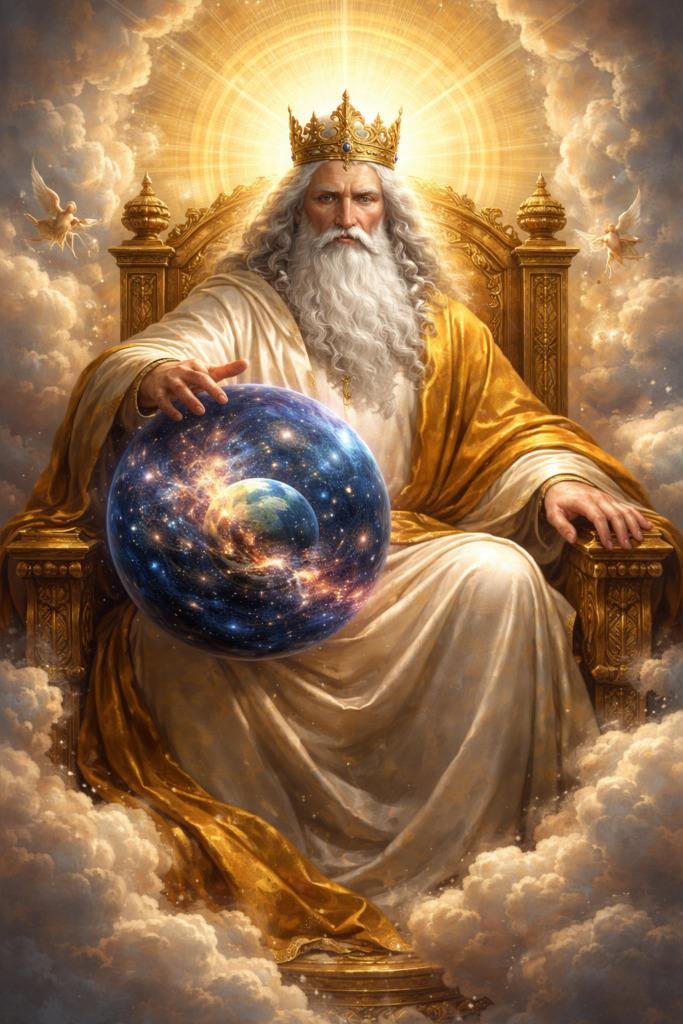
As the launch and subsequent splashdown unfolded, I found myself reflecting beyond the immediate spectacle. There was something almost symbolic in it: humanity stretching itself outward once again, reaching beyond its own planet with precision and confidence. And in that reflection, a more poetic thought arose—not literally about a voyage to Heaven, but about how such feats often stir deeper questions about transcendence, meaning, and the limits of human discovery.
Interestingly, I know of someone who, upon witnessing the Artemis II mission, began to wrestle with fundamental questions about God—His existence, where He “dwells,” and how He might be known. These are not new questions; they are among the oldest in human history, and the Christian tradition holds that they are not left unanswered.
The Church, in fact, teaches that human beings are created with an inherent openness to God. As stated in the Catechism of the Catholic Church, “Created in God’s image and called to know and love him, the person who seeks God discovers certain ways of coming to know him. These are also called ‘proofs for the existence of God,’ not in the sense of proofs in the natural sciences, but rather in the sense of ‘converging and convincing arguments,’ which allow us to attain certainty about the truth” (CCC 31). In other words, these are not laboratory-style demonstrations, but rational pathways that point beyond the material world toward a transcendent source.
From this perspective, God is not approached as an object of empirical measurement, but as the ultimate explanation for existence itself. Classical philosophical reasoning—especially that developed by Aristotle and later refined and Christianised by thinkers such as St. Thomas Aquinas—begins with observable reality and moves toward metaphysical explanation. One of these lines of thought argues that every motion or change in the world is caused by something else. Tracing this chain of causes backward logically leads to a first cause that itself is not caused—what Aquinas calls the “Unmoved Mover,” understood in Christian theology as God.
While such arguments are philosophical rather than scientific in the modern experimental sense, they are not therefore without rigor. They operate on a different level: not measuring God as an object within the universe, but reasoning toward the necessary foundation of all that exists.
At the same time, Christian teaching acknowledges that human reasoning alone can be limited. Our senses can mislead us, and imagination can distort our understanding. For this reason, the Church holds that reason is elevated and completed by faith—a form of knowing that is open to divine revelation rather than closed within purely empirical boundaries. Faith does not reject reason; rather, it allows reason to move beyond its natural limits toward truths that God Himself reveals.
As the tradition teaches, God is not hidden in silence or absence, but has already made Himself known in creation and in history: “God, who creates and conserves all things by his Word, provides men with constant evidence of himself in created realities…” This revelation is understood to unfold progressively—beginning with creation, continuing through the history of Israel, and reaching its fullness in the person of Jesus Christ.
From this standpoint, the question is not simply whether God exists as an abstract possibility, but how He has chosen to be known. The Church teaches that this knowledge is not only accessible through reflection on the world, but is personally disclosed in history.
This is why the apostolic witness in the First Letter of John speaks with such confidence: “We declare to you what was from the beginning, what we have heard, what we have seen with our eyes, what we have looked at and touched with our hands… concerning the Word of life” (1 John 1:1–2). The emphasis is on encounter—on a reality that is not merely inferred, but experienced and testified to. God exists, and we know Him.