Though the entire Bible is the Word of God and each book contains treasures for our spiritual growth, the Book of Genesis has always been one of my personal favourites. In it we encounter the beginnings of God’s relationship with humanity and some of the most powerful stories of faith.
In our first reading today from Genesis 12:1–4, we hear about the call of Abraham, who at that time was still known as Abram. God speaks to him and gives him a remarkable command: “Go from your country, your kindred, and your father’s house to the land that I will show you.”
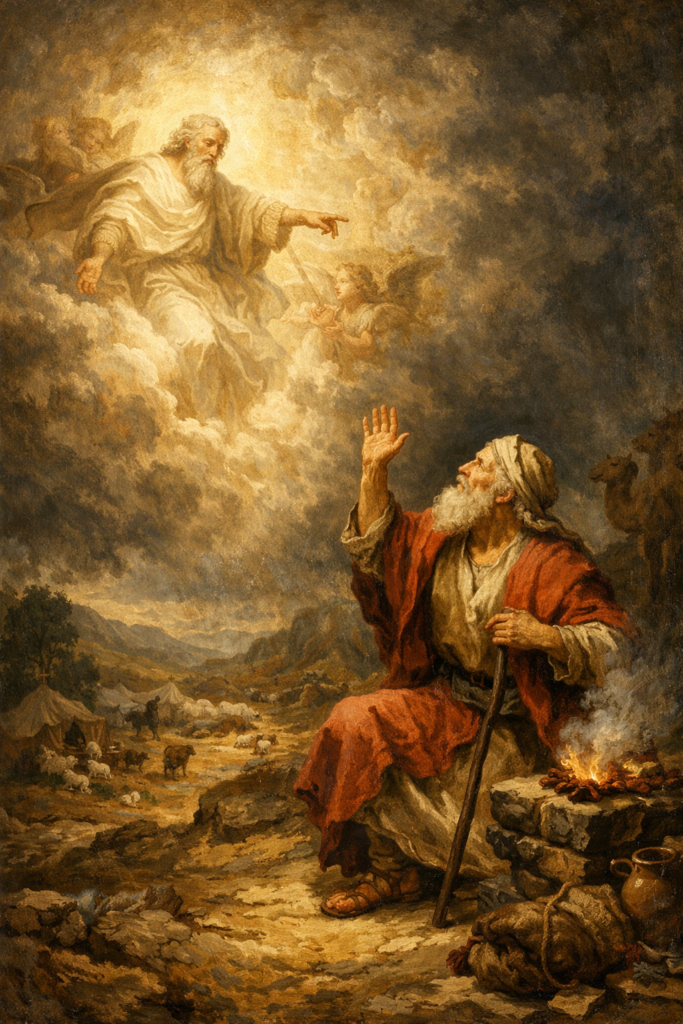
The call of Abram
Notice something important here: God does not give Abram a map. He does not show him the destination first. He simply asks him to go.
Yes, God promises Abram blessings—that he will become a great nation and that through him all the families of the earth will be blessed. But what strikes me most about this story is Abram’s trust. Leaving one’s homeland, culture, security, and family behind requires tremendous faith. Abram steps into the unknown, trusting not in what he can see, but in the One who calls him.
Some might say Abram obeyed only because of the promises made to him. But even with promises, it still takes deep faith to believe that those promises will truly be fulfilled. Abram’s obedience shows us what real faith looks like: trusting God enough to move when He calls.
In many ways, Abram’s journey reflects our own journey during Lent. As we enter deeper into this sacred season, we too are invited to begin a journey—a journey of rediscovery, a journey back to God, a journey into a deeper understanding of who we are as His children.
Like Abram, we are called to leave something behind. Sometimes it may be sin, sometimes unhealthy habits, sometimes attachments that keep us from fully following God. Lent invites us to step away from what is familiar and comfortable and allow God to lead us somewhere new.
But just as in Abram’s time, following God today is not always easy. We live in a world filled with many distracting voices, and these voices often confuses us and even lead us away from the path God.
Yet despite all the noise around us, the voice of God has not fallen silent. God still speaks to us—through the Scriptures, through the teachings of the Church, through the sacraments, and even through creation itself. As the Psalmist tells us in Psalm 19: “The heavens declare the glory of God; the firmament proclaims the work of his hands.”
However, we also live in a time of incredible technological advancement, a time when many people are tempted to rely more on science and technology than on God. We trust the devices in our hands more than the voice of the One who created us.
Take, for example, the Global Positioning System—GPS. I am certainly not discouraging the use of GPS. I use it often myself, and it is truly a remarkable invention. It helps us navigate unfamiliar roads and reach places we have never been before.
But this raises an important question: if we can trust a small device to guide us through unknown streets and cities, why do we sometimes struggle to trust God to guide us through the journey of life?
If we can follow the voice of a machine that calmly tells us, “Turn left,” or “Continue straight,” why is it sometimes difficult to follow the gentle voice of God calling us to love, to forgive, to repent, and to trust?
Jesus knew a time like this would come, a time when humanity would be deceived and confused, and that was the reason for the transfiguration in the Gospel today from Matthew 17:1–9.
Jesus knew that His disciples would soon witness His suffering and His death on the cross. Without preparation, such an experience could have shattered their faith completely. So before they see His suffering, Jesus allows them to see His glory.
The Transfiguration was meant to strengthen their faith. It showed them that the suffering they would soon witness was not the end of the story. Jesus was not a helpless victim; He was the Son of God who freely chose to lay down His life for our salvation.
Even though the disciples were deeply shaken by the Passion and death of Jesus, they never forgot what they saw on that mountain. That moment of glory became an anchor for their faith.
Dear brothers and sisters, we too experience moments in life when our faith is tested. We encounter pain, disappointments, uncertainty, and struggles that make us question where God is. And sometimes the difficulties around us try to silent the quiet voice of God within our hearts. But in those moments, we must remember our own “mountain experiences”—the moments when we have encountered God’s grace, His mercy, His presence in our lives. These experiences become anchors that keep our faith steady when the storms of life arise.
The Cross may bring suffering, but it also leads to victory. The road may be difficult, but it leads to resurrection.
So today the Church invites us to learn from Abram. Like him, we are called to trust God even when we do not see the full path ahead. Like the disciples, we are called to remember the glory of Christ even when we face the shadow of the Cross.As we continue our Lenten journey, may we listen more attentively to the voice of God, trust Him more deeply, and follow wherever He leads.