
In today’s Gospel, Jesus continues his intimate conversation with his apostles as he prepares them for his departure. We can almost feel the weight in the room. The apostles are troubled, confused, and even afraid. They have come to recognize Jesus as the Messiah, the one in whom they placed all their hope—and now he speaks of leaving them. For them, this is not just a change of plans; it feels like a loss.
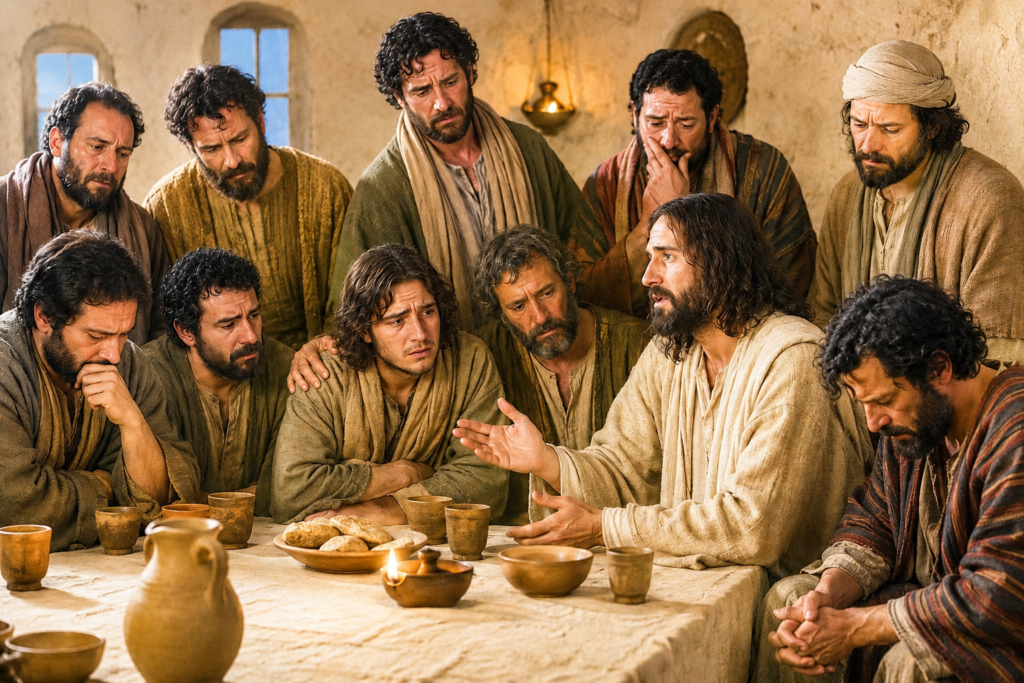
Sensing their anxiety, Jesus does not ignore their emotions. Instead, he speaks words that both challenge and comfort them: “If you love me, you will keep my commandments. And I will ask the Father, and he will give you another Advocate, to be with you forever.” (John 14:15-16).
At first glance, this statement can sound demanding, even unsettling. “If you love me…”—it almost feels conditional. Does this mean that every failure to obey is a failure to love? That can weigh heavily on the human heart.
But to understand Jesus properly, we must see that he is not laying down a harsh condition; rather, he is revealing a truth about love itself. Love, by its very nature, expresses itself in action. It seeks to respond, to give, to remain faithful. Jesus himself is the perfect example of this. He says in John 14:31, “I do as the Father has commanded me, so that the world may know that I love the Father.” His obedience is not forced—it is the natural expression of his love.
We can relate to this in our own lives. A child may deeply love their parents and yet still disobey at times. Spouses may genuinely love each other and still cause hurt. These moments do not erase love—but they do reveal its imperfections. In the same way, when we disobey God, it does not necessarily mean love has disappeared—but it does show that our love still needs to grow, to mature, and to be purified.
So Jesus’ words are not meant to condemn us, but to invite us deeper. He is saying, in effect: If you truly love me, let that love shape how you live.
And here is the beautiful part—Jesus does not leave us to accomplish this on our own. He immediately promises help: “I will ask the Father, and he will give you another Advocate.” This Advocate, the Holy Spirit, is not just a helper from the outside, but God dwelling within us. The Christian life is not merely about trying harder; it is about allowing Christ to live in us and act through us.
This is why the awareness of the Holy Spirit is so essential. To live an authentic Christian life, we must first know who we are and whose we are. We are not alone. God is not distant. Through the Holy Spirit, Christ is present within us—guiding us, strengthening us, and transforming us from within.
Without this awareness, the world can easily overwhelm us. But with it, we gain spiritual courage. As Scripture reminds us: “Greater is He who is in you than he who is in the world.” (1 John 4:4). When we anchor our lives in this truth, we find the strength to persevere even in uncertainty and in fear.
We see this courage in the first reading, where Philip goes to Samaria—a place considered foreign and even hostile—and boldly proclaims Christ. His confidence did not come from himself, but from the Spirit working within him. And because of that, many came to believe.
The same Spirit is given to us. He is present in our moments of strength, but also in our weakness. When we struggle, when we feel lost, when we do not even know how to pray, we are not abandoned. As Saint Paul tells us, the Spirit himself intercedes for us with sighs too deep for words. God is at work within us even when we cannot find the words to reach out to Him.
As we celebrate this Sixth Sunday of Easter, we are invited to rediscover our identity in Christ. We are loved, we are not alone, and we are empowered by the Holy Spirit.
Let us then ask for the grace to grow in love—not a love that remains only in words or feelings, but a love that is lived out in faithful obedience. And let us trust that the One who calls us to this love also gives us the strength to live it.