
On Good Friday, after our Lord Jesus Christ had been crucified and had breathed His last, His sacred body was taken down from the cross and laid in a tomb. A heavy stone was rolled across the entrance, sealing it shut. To all outward appearances, it seemed as though the story had ended. Hope appeared buried. The stone seemed to speak of finality, defeat, and silence.
Mary Magdalene obviously seemed to be among those who witnessed the burial, she knew the location of the tomb. And so, very early on the first day of the week, while it was still dark, she made her way there. A profound image of faith this is.
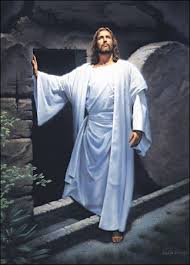
Mary Magdalene went to the tomb not because she expected the resurrection, but because love drew her there. She did not yet know that the Lord had risen, yet her actions already proclaimed a deeper truth: not even death could separate her from Christ.
She is a courageous woman. A faithful disciple. A woman whose love was stronger than fear, stronger than grief, and even stronger than the darkness of that morning.
When Mary arrived at the tomb, she immediately noticed something astonishing: the heavy stone that had been rolled across the entrance had been moved away, and the tomb was empty.
She ran quickly to inform the apostles of what she had seen. Peter and the beloved disciple came, entered the tomb, and saw for themselves that it was empty. But after seeing, they returned home. Mary, however, did something remarkable; she stayed.
This is one of the most powerful moments in the resurrection story for me. She stayed at the tomb. She remained there in her confusion, in her tears, and in her uncertainty. What a powerful expression of love and faith.
There is great spiritual power in learning how to stay, how to wait, and how to trust even when we do not understand what God is doing.

The prophet Isaiah reminds us: “Those who wait upon the Lord shall renew their strength; they shall mount up with wings like eagles.”
Mary stayed not because she had all the answers. She stayed not because everything suddenly made sense. She was troubled, weeping, afraid, and overwhelmed by sorrow. But she stayed. And because she stayed, she became the first person to encounter the risen Lord.
There are times when life becomes confusing and painful. There are moments when it feels as though a heavy stone has been rolled across our dreams, our hopes, our plans, and our deepest desires.
Sometimes that stone may be disappointment. Sometimes it may be loss. Sometimes it may be fear, failure, sickness, or uncertainty about the future. In such moments, the Easter message to us is this: stay, wait, and trust the Lord. It is often in the place where we weep that resurrection begins.
When Mary finally saw Jesus, the Gospel tells us that she did not recognize Him at first. She mistook Him for the gardener. But then everything changed the moment Mary heard her name spoken by the Lord, she immediately recognized His voice and cried out in Hebrew, Rabbouni! Which means Teacher.
Mary knew the way Jesus said her name. And so, even with tears flowing down her cheeks, even in what seemed like the darkest moment of her life, she still recognized the voice of the Lord.
This is the deeper meaning of Easter. It is not only about celebrating a historical event that happened over two thousand years ago. It is about recognizing that the risen Christ still speaks. He still calls us by name.
The question for each one of us today is this:
Do I recognize His voice? Am I merely celebrating something that happened in the past, or am I truly experiencing the living presence of Christ here and now?
Easter is not simply the remembrance of a past event. It is the celebration of a present reality. Christ is alive. He is present among us. He walks with us in our sorrow, stands beside us in our confusion, and calls us by name in our moments of darkness.
The resurrection power of Jesus is not confined to history; it is active in our lives today. This is what we celebrate: He is risen. He is here. He is with us now.