In the Gospel, Jesus uses several parables and images to teach us about the coming of the Kingdom of Heaven and the end of time. Although these parables differ in their details, they all convey one central message: the end will surely come, the Lord will return, and we must always be ready. Although speaking about the end of time makes some people uncomfortable, it remains an unavoidable reality.
What makes this reality even more challenging is that we do not know when it will happen. That is why Jesus does not simply tell us He will come; He urges us to remain watchful and prepared. The important question is not whether the Lord will come, but whether we will be ready when He does.
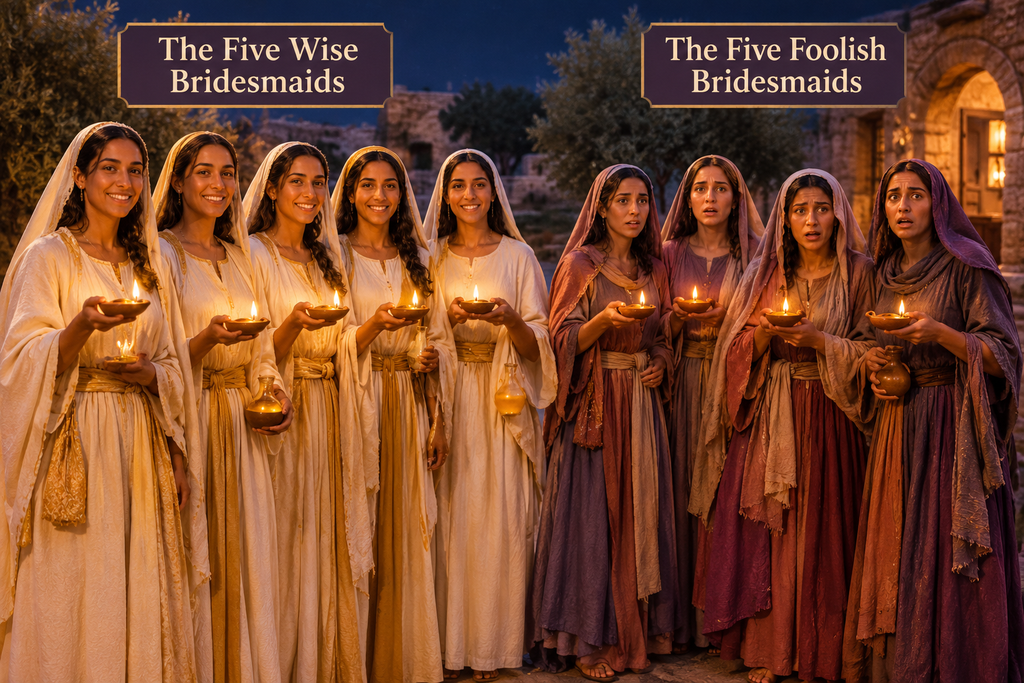
In today’s Gospel, Jesus tells us the parable of the ten bridesmaids. Five are wise, and five are foolish. All ten were invited to the wedding celebration, took their lamps, and went out to meet the bridegroom, and all ten seemed prepared. Yet one important difference separated them: the wise bridesmaids took extra oil, while the foolish ones did not.
This detail is at the heart of the parable. Having a lamp is not the same as having enough oil. Having a lamp does not automatically guarantee it will keep burning. The lamp needs oil to keep burning.
We can understand the lamp as a symbol of the gift of faith we receive through baptism. Every baptized Christian has received this lamp. During the celebration of Catholic baptism, the newly lit candle symbolizes the light of Christ entrusted to the newly baptized.
I remember an infant baptism I celebrated. After lighting the baptismal candle, I handed it to the godparent and said, “Keep this flame alive and hand it to the child when she grows up.” The godparent looked at me with a surprised expression, almost as if to ask, “How am I supposed to keep this flame burning until the child grows up? Extra oil!
We have received the lamp of faith at baptism, but do we still have enough oil to keep it burning?
The lamp can be understood as the outward expression of our Christian identity, while the oil symbolizes the inner spiritual life of faith that sustains it. The oil is our daily prayer, our faithfulness to God, our love for our neighbours, our commitment to holiness, our repentance, our forgiveness, our acts of charity, and our perseverance in doing what is right, even when no one is watching.
The oil is what keeps our faith alive when life is difficult. It sustains us when suffering becomes unbearable, when temptations are strong, and when following Christ demands sacrifices we would rather avoid.
Notice that all ten bridesmaids became drowsy and fell asleep because the bridegroom was delayed. The wisdom of the wise did not prevent them from becoming tired, but the difference between them was that they had made adequate preparations before the moment of crisis arrived.
This is a very important lesson for us. Being a Christian does not mean we will never grow tired, discouraged, or spiritually weak. There will be moments when our faith is tested, when we struggle to pray, when we feel distant from God, and when we wonder why the Lord seems to take so long to answer our prayers. But we must not allow those moments to extinguish the flame of faith within us.
We need extra oil for life’s unexpected delays. We need a prayer life that extends beyond Sunday Mass. We need a relationship with God that doesn’t depend on our emotions or circumstances. We need a faith deeply rooted in Christ so that when life’s storms come, we will not be easily shaken.
Another strong point in this parable is that when the foolish bridesmaids realized their lamps were going out, they turned to the wise bridesmaids and pleaded, “Give us some of your oil, for our lamps are going out.” But the wise bridesmaids replied that there might not be enough for everyone and advised them to go buy some for themselves.
This response may sound selfish. Shouldn’t the wise bridesmaids have shared their oil? Isn’t Christianity about generosity and helping one another? Why would they refuse to share?
However, Jesus is teaching us something deeper through this detail: there are certain dimensions of our spiritual lives that no one can develop on our behalf.
Our parents may have introduced us to the faith, but they cannot continue to believe on our behalf. They may have encouraged our spirituality, but they cannot cultivate our personal relationship with God for us. Faith can be shared, but personal commitment to God cannot be transferred from one person to another. It cannot be borrowed.
Let us, therefore, not be Christians with lamps but no oil, with faith in name only, not in practice, or with religious appearances without genuine spiritual commitment. Let us be like the five wise bridesmaids, who understood that preparation must take place before the bridegroom arrives.
May the Lord grant us the grace to keep our lamps burning, the wisdom to prepare for His coming, and the perseverance to remain faithful to the end.
Amen.