
A question runs through today’s readings, particularly the first reading and the Gospel. It is one question that human beings have asked for centuries: Is God fair?
In the first reading, God speaks through the prophet Ezekiel to a people who have begun to accuse Him of injustice. They say, in effect, “The Lord’s way is not fair!” They are troubled by God’s way of judging people.
They cannot understand how a wicked person who turns away from sin and begins to live righteously can be forgiven and live, while a righteous person who abandons goodness and chooses evil can lose the life he once enjoyed. How can this be fair? they ask.
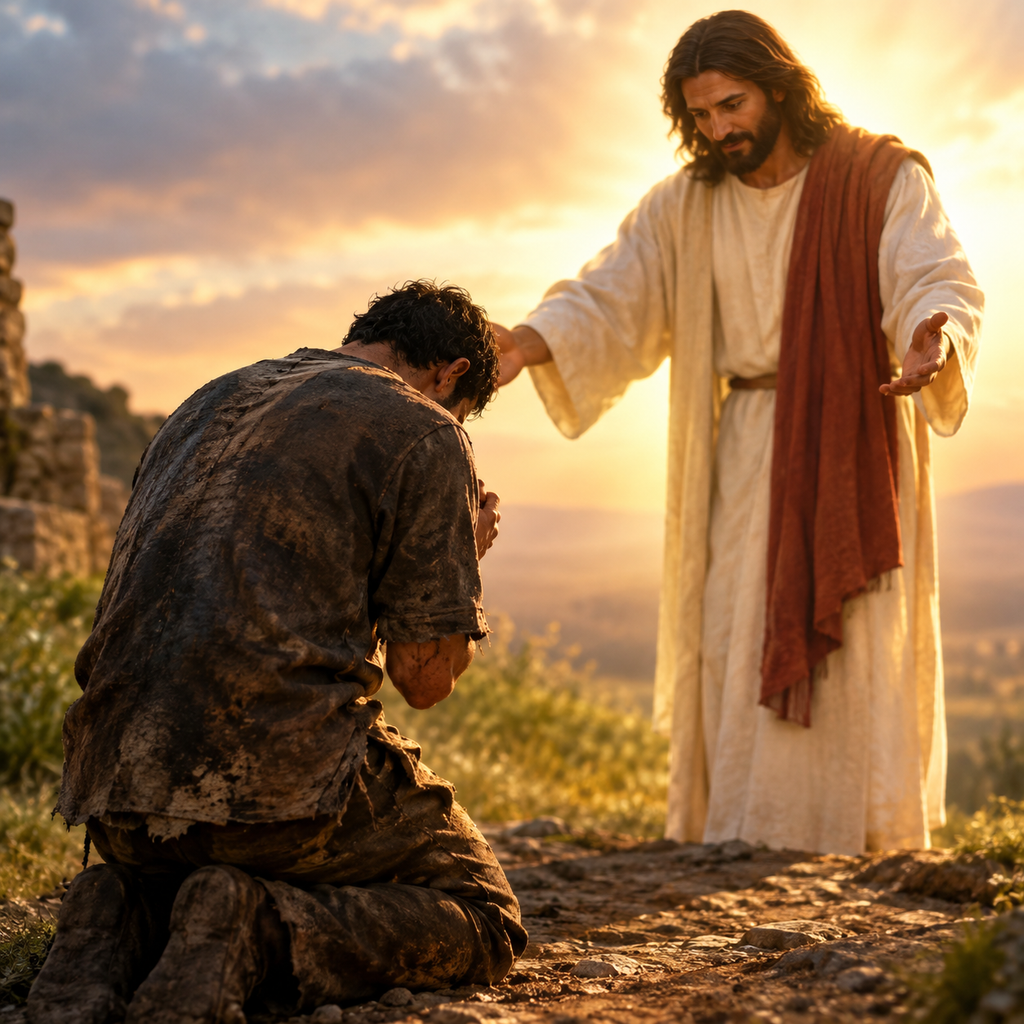
At first, we might be tempted to ask the same question. We live in a world where we often keep records. We remember what people have done to us. We keep track of who has been good and who has been bad. We can easily begin to think that a person’s past should permanently determine their future.
But God’s ways are not like ours. Today’s readings are not primarily about why righteous people suffer or why bad things happen to good people. Rather, they are about conversion and final judgment—about the direction in which a person’s life is ultimately moving.
That is why Jesus says something that must have shocked His listeners: “Truly I tell you, the tax collectors and the prostitutes are entering the kingdom of God ahead of you.”
These are very strong words. Jesus is not praising their sinful past, nor is He saying that sin does not matter. Rather, He is emphasizing the power of repentance and conversion.
The people whom society had already labelled as sinners were responding to John the Baptist’s preaching. They were recognizing their sin, repenting, and changing the direction of their lives. Meanwhile, those who considered themselves righteous refused to believe and refused to change.
While we cannot fully understand God, Scripture helps us understand something about how He sees us. God does not simply keep a scorecard of our lives—a list of good deeds on one side and bad deeds on the other—and then mechanically calculate our final result. He is interested in the truth of our hearts and the direction of our lives.
A person who has lived badly but sincerely repents is not merely someone with a bad past. He is someone whose life has changed direction.
And a person who has done many good things but deliberately abandons goodness cannot simply say, “But look at all the good things I have done.” The question is: Where is your heart now? Where is your life headed?
This is precisely what Jesus teaches us in the Gospel. He speaks of a father who approaches his two sons and tells them to go and work in the vineyard.
The first son answers, “I will not.” His response is disrespectful. He refuses his father. Later, he changes his mind and goes. The second son responds, “Yes, sir, I am going,” but he does not go. And Jesus asks the chief priests and elders: “Which of the two did the will of his father?”
The first, they answered. And they were right because ultimately, what mattered was not simply what the sons said, but what they did.
The first son said the wrong thing but eventually did the right thing. The second son said the right thing but ultimately did not do what his father asked him to do.
Jesus is therefore challenging a very common human tendency: we can become more concerned with appearing righteous than with becoming righteous. It is possible to say all the right prayers and still have a heart far from God. It is possible to speak beautifully about faith and yet refuse to forgive. It is possible to attend Mass and still deliberately hold on to hatred, dishonesty, pride, greed, or other sins.
We can say “yes” to God even after having said “no” for many years. That is the heart of our liturgy of the word today and of the Christian message: conversion.
God’s justice system is merciful. It does not, however, mean sin does not matter. Sin matters. Our choices matter. The direction of our lives matters. When a person sincerely turns away from sin and returns to God, God does not say, “You are disqualified because of your past.” He welcomes the repentant sinner. And if a righteous person turns from righteousness to sin and dies in his sin, he is condemned.
May the Lord grant us the humility to recognize our sins, the courage to repent, and the grace to redirect our lives.
Amen.