
In today’s Gospel, Jesus gives us three beautiful parables to help us understand the Kingdom of Heaven. He compares it to a hidden treasure, a pearl of great price, and a fishing net that gathers fish of every kind before the good are separated from the bad.
These parables invite us to reflect on two important questions: How much do we value the Kingdom of God? And what are we willing to do to remain in it?
The first two parables emphasize the incomparable value of God’s Kingdom. A man discovers a hidden treasure in a field. Filled with joy, he goes and sells everything he owns to buy that field. Likewise, a merchant searching for fine pearls finds one pearl of extraordinary value. He, too, sells everything he has in order to possess it.
Notice that neither man considers what he gives up to be a loss. Their eyes are fixed on what they have found. The treasure is so valuable that every sacrifice becomes worthwhile. This is precisely how Jesus wants us to see the Kingdom of Heaven. There is nothing in this world that can compare with living in friendship with God and, ultimately, sharing eternal life in His presence. The Kingdom is worth more than wealth, success, comfort, popularity, or any earthly possession because it alone lasts forever.
Yet finding a treasure is only the beginning. It is one thing to recognize its value; it is another to continue treating it as the priceless gift that it is. Sometimes we receive something precious but gradually begin to take it for granted. We neglect it, compromise it, or allow other things to become more important. Sadly, this can also happen in our spiritual lives.
The first reading presents King Solomon as an example. When God invited him to ask for whatever he desired, Solomon did not ask for riches, long life, or victory over his enemies. Instead, he asked for wisdom—an understanding heart that would enable him to govern God’s people well. Solomon recognized that wisdom was the greatest treasure he could possess, and God generously granted his request.
However, Solomon’s story also serves as a warning. Although he began with wisdom, he did not persevere in protecting that gift. Over time, he surrounded himself with influences that drew his heart away from God. His many foreign wives led him to compromise his faith and worship other gods. The man who had once chosen wisdom eventually acted without it because he failed to guard the treasure God had entrusted to him.
The same danger exists for us today. Like Solomon and unlike the man in the Gospel, we do not have to purchase the Kingdom of Heaven. We cannot earn it, nor can we buy it. The price has already been paid by Jesus Christ through His suffering, death, and resurrection. Salvation is God’s free gift, offered to us through His grace.
Yet although the Kingdom is freely given, remaining faithful to it requires sacrifice. We may not have to sell our possessions, but we are called to let go of whatever threatens our relationship with God. For Solomon, it was the influence of those who led him away from the Lord. For us, it may be different. It may be an excessive attachment to money or success, unhealthy relationships, resentment that we refuse to forgive, a weakening prayer life, neglect of the sacraments, indifference to our faith, or allowing the distractions and anxieties of this world to consume our hearts. We must choose God no matter what comes our way.
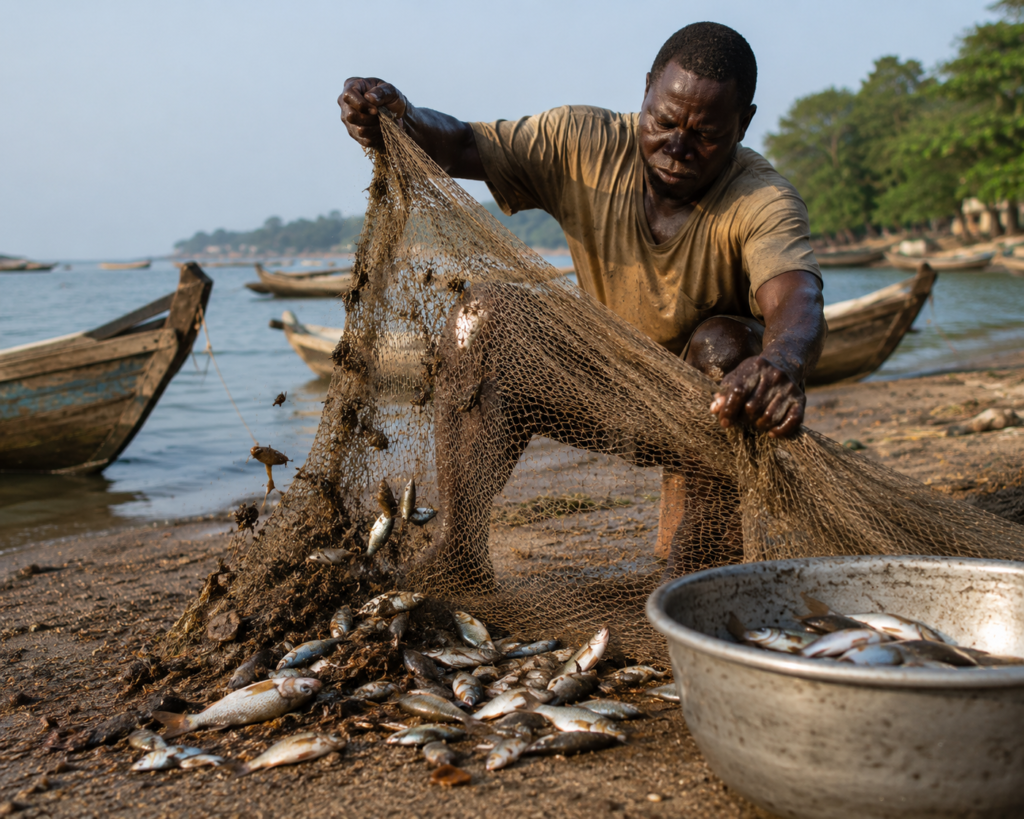
The final parable adds another important lesson. Jesus compares the Kingdom to a net cast into the sea that gathers fish of every kind. When it is full, the fishermen sit down and separate the good fish from the bad. This reminds us that the invitation to God’s Kingdom is universal. The net gathers everyone. God desires the salvation of all people, and His Church welcomes all who seek Him. Yet being invited into the Kingdom is not the same as inheriting it. The Kingdom must be embraced through a life of faith, obedience, repentance, and perseverance. What matters is not simply how we begin the journey but whether we remain faithful until the end.
As we celebrate this Eucharist, let us pray for the grace to live each day faithfully and remain steadfast in our commitment to choose God above all other things always. And one day to hear the words we long for: “Well done, good and faithful servant… enter into the joy of your Master.” Amen.