The Solemnity of Our Lord Jesus Christ, King of the Universe, brings the Church’s liturgical year to a close after a journey through the mysteries of Christ’s life, death, and resurrection, as well as the celebration of feasts and solemnities. Next Sunday, we begin a new liturgical year with the First Sunday of Advent, when the Church once again invites us to prepare our hearts for the coming of Christ.
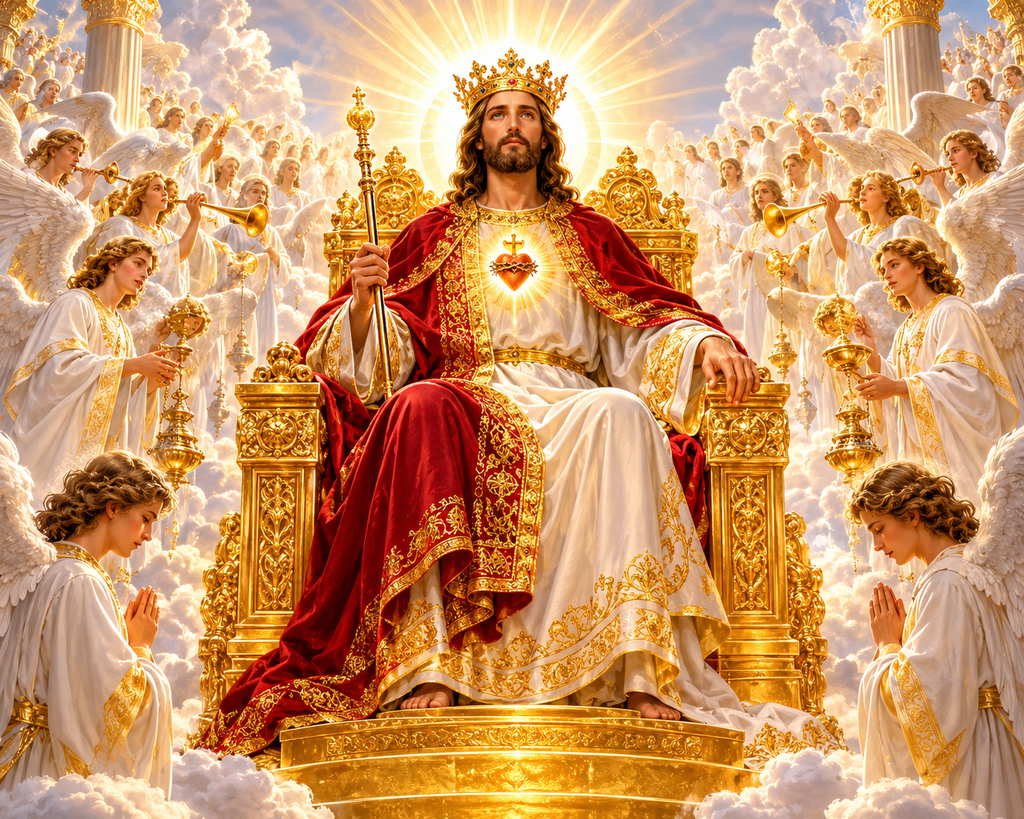
There is something particularly significant about ending the liturgical year by celebrating Christ as King. It reminds us that history, or human existence, is not a journey without direction or destination. Everything begins in God and ends in God—his kingdom.
When we speak of a king, we ordinarily mean someone who exercises supreme authority over a kingdom and its people. However, kingship is not simply about occupying a throne or exercising authority; it is more about providing vision, direction, guidance, protection, and leadership for the people. Moreover, the kingship of Jesus Christ is radically different from the kingship of this world because it is eternal life.
Jesus is King, but His kingship is not founded on political influence, military strength, or the ability to intimidate people into submission. His kingship is founded on love, truth, justice, mercy, and self-sacrifice.
In the first reading, God speaks through the prophet Ezekiel, promising that He Himself will come to shepherd His people. God does not simply promise to send someone to look after His people; He promises to come Himself. This promise finds its ultimate fulfilment in Jesus Christ, who did not come into the world to become King but was born King.
Recall the account of the visit of the Magi. When the wise men arrived in Jerusalem, they asked Herod, “Where is the infant king of the Jews?” They were not looking for a child who would eventually become king. They were looking for a King who had already been born.
This is the mystery of Jesus’ kingship: His majesty is not diminished by His humility, and His authority is not weakened by His poverty. He conquers not by taking lives but by giving His own. He does not save Himself at the expense of His people; He sacrifices Himself for our salvation. And at the heart of His kingship is the mystery of the Cross.
Our sins created a separation between humanity and God. Through our disobedience, we became subject to the consequences of sin and death. Yet Christ, in His infinite love and mercy, took upon Himself the burden of our redemption.
In the second reading, Paul reminds us that Jesus conquered death: Christ has been raised from the dead, the first fruits of those who have fallen asleep, and He reigns forever as universal King and compassionate Saviour.
Our Gospel passage for today draws our attention to an important truth about the kingship of Jesus Christ: it is comforting to celebrate Christ as a loving King, a merciful Saviour, and a compassionate Shepherd, but His mercy does not make our choices inconsequential. We cannot claim to love and celebrate the King while ignoring His teachings. Our relationship with Christ cannot be separated from our relationship with our neighbour.
When He returns, is He going to say to us, “I was hungry and you gave me food, I was thirsty and you gave me drink, I was a stranger and you welcomed me, naked and you clothed me, ill and you cared for me, in prison and you visited me” or is He going to say we failed in these areas?
Sometimes, we imagine that holiness necessarily requires extraordinary achievements. But today’s Gospel reminds us that holiness is often expressed through very ordinary acts of love and a simple, faithful daily life. A meal given to someone who is hungry, a visit to someone who is lonely, a kind word to someone who is discouraged, forgiveness offered to someone who has offended us, or assistance given to someone in difficulty may appear insignificant in the eyes of the world. Yet, in the eyes of Christ the King, these acts have eternal significance.
Many people want Christ to be their Saviour but are reluctant to allow Him to be their King. Many want His forgiveness but not His direction. We cannot separate Christ’s identity as Saviour from His identity as King. To acknowledge Him as King is to recognize that He has authority over every aspect of our existence.
Dear friends, as this liturgical year ends, the Church invites us to examine the direction of our lives and ensure it aligns with the teachings of Christ the King. And also, to be prepared to begin another liturgical year with the season of Advent.
May Christ reign in our hearts, in our families, in our communities, and throughout the world.
Amen.